To secure Leatherman Wave Plus tower climber harness D-ring attachment safely, run a rated tool lanyard (5–10 lb working load minimum) through the multitool's frame slot, then anchor it to a side accessory D-ring rather than the dorsal fall-arrest ring. Combine the lanyard with a closed sheath that has a Velcro or snap retention flap, keep the tether short enough to prevent free-fall slack against the structure, and inspect both the D-ring and lanyard before every climb. Never clip the tool directly to a load-bearing fall-arrest point — those are reserved for life safety, not tools.
Why D-ring placement matters more than the tool itself
A Leatherman Wave Plus weighs 8.5 ounces. From 80 feet on a cell tower, that's enough kinetic energy to crack a hardhat or kill a coworker below. ANSI/ISEA 121-2018 is the dropped-object standard tower climbers are expected to follow, and it does not allow tools to share life-safety anchor points. The dorsal D-ring (between the shoulder blades) and the front sternum D-ring are fall-arrest anchors. Everything else — hip D-rings, side accessory D-rings, gear loops on the waist belt, and bag attachment points — is fair game for tools.
When shopping for secure leatherman wave plus tower climber harness, it pays to compare specs, capacity, and real-world runtime before committing.
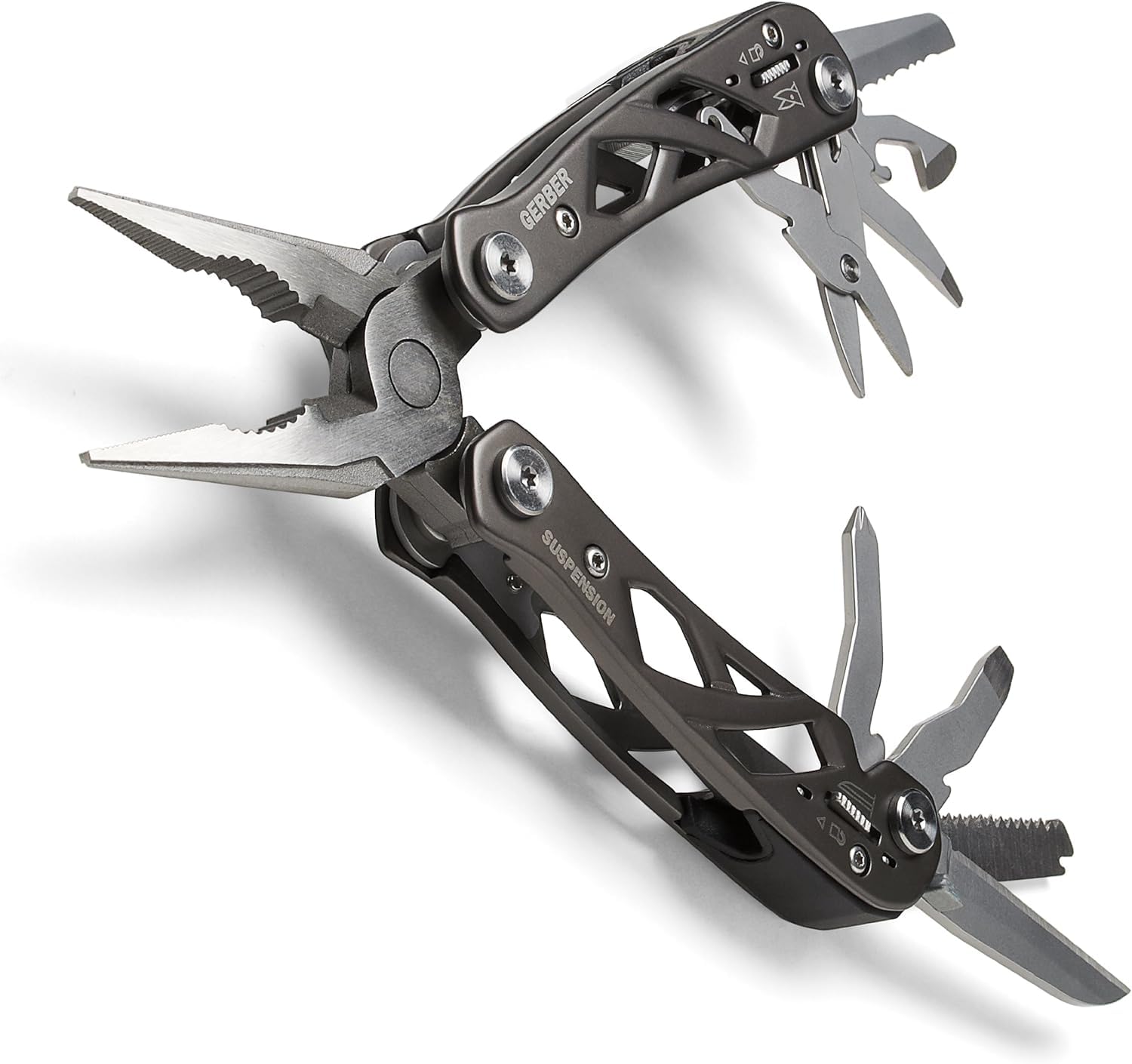
For a Wave Plus specifically, you want the tool reachable with your dominant hand while you're standing in a positioning lanyard. That usually means the dominant-side hip D-ring or a side accessory ring just above the leg strap. Climbers who clip the multitool to the chest D-ring almost always regret it: the tool swings into the antenna mount when they lean forward, and the sheath snags on the rope grab.
What 'secure' actually means for tower work
Securing a multitool at height has three independent jobs:
- Drop prevention. If the tool slips out of your hand or the sheath, a tether catches it before it falls past your boots.
- Retention. The sheath holds the tool in place during inversion, brushing against the structure, and rope friction.
- Access. You can deploy the tool one-handed while wearing gloves, and re-stow it without looking.
A bare carabiner through the Wave Plus pocket clip fails all three. The clip will pop off under lateral load, the tool spins freely when you don't need it, and you can't open the pliers one-handed without unclipping. To properly secure Leatherman Wave Plus tower climber harness setups, every piece of the system has to do a defined job.
The lanyard: choose by working load, not breaking strength
Tool lanyards are rated two ways. The advertised breaking strength is the destructive failure number. The maximum tool weight is the working number you actually care about. For the 8.5 oz Wave Plus, any lanyard rated for 2 lb tools and up is mechanically sufficient, but climbers usually choose a 5–10 lb lanyard because the heavier rating uses thicker webbing that resists abrasion against galvanized steel.
Three lanyard styles work for the Wave Plus:
- Coiled retractable. Stretches from about 8 inches to 36–48 inches. Best for climbers who use the tool frequently — cabling techs, antenna installers. The coil keeps slack out of the way during transitions.
- Bungee tether. Less expensive than a true retractor, more reliable in cold weather where retractors can lock. Choose one with a heat-shrink-protected splice rather than a sewn loop near the tool end.
- Fixed webbing lanyard. A short 12–18 inch sewn loop. Best when the Wave Plus lives in a closed sheath and only comes out occasionally — maintenance inspectors, riggers checking shackles.
Skip anything that uses a split-ring or keychain ring at the tool end. Split rings open under lateral load on the Wave Plus frame and the tool will detach mid-job. You want a sewn loop, a screw-gate carabiner, or a girth-hitched cord.
Attaching the lanyard to the Wave Plus
The Wave Plus has a small frame slot near the lanyard ring on the bit-holder end. It's roughly 5 mm wide — large enough for a 3 mm accessory cord girth hitch or a small steel split ring, but too small for a heavy carabiner spine. Three reliable attachment methods, in order of preference:
- Girth hitch with 3 mm Dyneema cord. Loop a 4-inch piece of cord through the frame slot, pass it through itself, and cinch tight. The cord becomes the permanent tool-end loop your lanyard clips into. Replace annually.
- Heat-shrunk wire loop. Stainless wire bent through the slot, twisted, and sealed in adhesive-lined heat shrink. Common in industrial drop-prevention kits.
- Direct sewn webbing. Some tool lanyards ship with a thin webbing tail designed to thread the slot and sew back on itself. Works but means the lanyard is permanently dedicated to that tool.
Do not rely on the pocket clip as your attachment point. The clip is screwed to the scale and rated for pocket retention, not lateral load.
The sheath: prevent loss before the tether has to catch
The Leatherman premium leather sheath that ships with some Wave Plus packages is fine on the ground and useless on a tower. The flap is held by a small magnet that releases the moment the sheath tips upside-down or rubs against a structure member. For climbing, switch to one of these:
- MOLLE nylon sheath with snap or Velcro flap. Affordable, light, and works with a 1-inch belt or accessory D-ring via a thread-through loop.
- Kydex sheath with retention screw. Snaps the tool in place audibly so you know it's seated. Heavier but bombproof.
- Closed-top cordura pouch with drawstring. Best for inspectors who don't deploy the tool repeatedly. The drawstring stays closed even on overhanging structures.
Whichever style you pick, the sheath itself should also be tethered to the harness with a small drop lanyard. Sheaths fail too — a torn belt loop will send the whole assembly down.
Step-by-step: rigging the system before the climb
- Inspect the D-ring. Look for elongation, paint chips at stress points, and burrs on the inside curve. A worn accessory D-ring won't fail catastrophically the way a fall-arrest ring would, but it will saw through a webbing lanyard.
- Inspect the lanyard. Stretch the bungee or coil fully. Check the swivel on the carabiner end for free rotation. Look at every stitch on sewn terminations.
- Inspect the sheath. Open and close the retention flap five times. Confirm the Wave Plus seats fully — if the tool is sitting half an inch high, the flap won't hold during inversion.
- Connect tool to lanyard, lanyard to D-ring. Use a screw-gate or auto-lock carabiner at the D-ring end. Snap gates open against structure members.
- Trim the slack. The fully-extended lanyard should not allow the tool to reach the climber's ankles. A dropped tool that swings into the leg below the knee can still cause injury and will definitely scar the structure paint.
- Stow the tool. Sheath closed, lanyard routed so it doesn't cross the rope-grab path or the positioning lanyard.
Common mistakes that send tools off the tower
- Clipping to the fall-arrest D-ring. Violates ANSI 121 and most company policies. The tool will also bash against the back of your helmet every time you look up.
- Using a keychain split ring as the tool-end attachment. Split rings open under repeated load cycling. The Wave Plus has been documented falling from belts using exactly this attachment.
- Tether longer than reach. A 60-inch coiled lanyard sounds convenient until the tool falls and pendulums into a coworker on a lower section.
- Sheath on the dominant side and dominant-side rope grab. You'll fight the rope every time you deploy. Cross-draw setups (sheath on weak-side hip) are faster for most climbers.
- Skipping the post-climb inspection. Galvanized steel and salt air abrade webbing surprisingly fast. Lanyards that pass pre-climb can fail two weeks later.
Cold weather, gloves, and one-handed deployment
The Wave Plus opens with an outside-accessible blade, which is the single biggest reason it's popular with tower climbers — you can deploy the knife or saw without unfolding the handles. That advantage disappears if the sheath flap requires two hands. When you're shopping for retention, look for a flap that releases with a single thumb sweep, not a buckle. Test it with the gloves you actually climb in, not bare-handed in the shop.
In freezing weather, bungee lanyards stiffen and coiled retractors can freeze in the extended position. Inspectors in northern climates often keep a backup fixed-webbing lanyard in their kit bag for sub-zero days.
Maintenance and replacement intervals
Tool lanyards are PPE. Most manufacturers specify a 1-year service life from first use, regardless of visible wear, plus immediate retirement after any shock load or visible damage. Document the in-service date with a paint pen or shrink-wrap label. The sheath itself isn't life-safety equipment but should be replaced annually — a worn retention flap fails progressively, not suddenly, so climbers often miss the warning signs.
Clean the Wave Plus itself after exposure to salt fog or rain. Salt accelerates corrosion in the pivots and the bit holder, both of which can seize and force you to deploy the tool with two hands at height.
Related reading on multitool selection and care
If you're still deciding whether the Wave Plus is the right multitool for tower work versus an alternative like the Victorinox SwissTool, the comparison in our Leatherman Wave Plus vs Victorinox SwissTool breakdown covers blade lock differences and one-handed opening behavior at length. For broader context on multitool selection, our guide to picking the perfect multitool walks through the tradeoffs for trades that work at height. And for ongoing care, the multitool and flashlight maintenance guide covers pivot cleaning and corrosion control that matters disproportionately to climbers exposed to weather.
Frequently Asked Questions
Can I clip a Leatherman Wave Plus directly to a harness D-ring with a carabiner?
Only if the carabiner connects to a sewn lanyard loop or girth-hitched cord at the tool end — never directly to the pocket clip. The clip is screwed to the scale with two small fasteners rated for pocket retention, not lateral pull. A carabiner through the frame's lanyard slot is acceptable for short hauls, but for repeated climbing use a dedicated tool lanyard with a retention element (bungee or coil) so the tool doesn't swing freely.
Which harness D-ring is correct for a multitool on a tower climbing harness?
A side accessory D-ring or hip D-ring on the dominant-hand side. Fall-arrest D-rings (dorsal between shoulders, sternal at chest) are reserved for life-safety connections and most company safety policies prohibit tool attachment there. If your harness only has fall-arrest rings, add a dedicated tool belt or accessory loop — don't share the anchor.
What working-load rating should a tool lanyard for a Wave Plus have?
The Wave Plus weighs 8.5 oz (0.53 lb), so the mechanical minimum is roughly 1 lb working load. In practice, choose a lanyard rated for 5–10 lb because the heavier rating uses thicker webbing that resists abrasion against galvanized steel and lasts longer in the field. Check the manufacturer's maximum tool weight spec, not just the breaking strength.
How do I stop the Wave Plus pocket clip from popping off when I climb?
Remove the pocket clip entirely for tower work. The clip is designed for pants pockets, not for repeated lateral loading against a sheath wall or harness webbing. Without the clip, the Wave Plus seats deeper in a Kydex or nylon sheath and the retention flap closes more reliably. Keep the clip and screws in your kit bag if you also carry the tool off-duty.
Does ANSI/ISEA 121 apply to multitools or just to power tools?
It applies to any tool a worker takes to height, including multitools, knives, tape measures, and screwdrivers. The standard defines attachment requirements, anchor strength, and labeling. Most jobsites enforce it through company drop-prevention programs. The Wave Plus itself isn't certified to a tool weight class — the lanyard and attachment hardware carry the certification.
Is a magnetic-flap leather sheath safe enough for tower climbing?
No. Magnetic retention releases under inversion or lateral impact against a structure member. Use a Velcro, snap, screw-retained Kydex, or drawstring closed-top sheath instead. The factory leather sheath is appropriate for belt carry on the ground but should not go up the tower.
How often should I replace the tool lanyard on my climbing harness?
Replace annually from first use, or immediately after any shock load, visible abrasion, broken stitching, deformed hardware, or chemical contamination. Date the lanyard with a paint pen on the webbing label when you put it into service. Climbers in coastal or industrial environments often shorten the interval to six months because salt and chemical exposure accelerate webbing degradation.
Key Takeaways
- Choosing the right secure leatherman wave plus tower climber harness means matching capacity and output ports to your actual devices
- Always check actual watt-hours (Wh), not just watts — runtime depends on Wh, not peak output
- Also covers: tower climber multitool tether d-ring
- Also covers: leatherman wave plus harness lanyard
- Also covers: cell tower technician edc tool attach
- Compare price-per-Wh across models to find the best value for your budget