Tethering a Gerber Suspension NXT to a scaffold belt is the single fastest way to keep ironworkers compliant with OSHA dropped-object rules and prevent a 6.7-ounce multitool from becoming a high-velocity hazard on the deck below. The short answer to how to tether Gerber Suspension NXT for ironworkers is this: thread an ANSI/ISEA 121 Class 1 coiled or retractable lanyard through the integrated lanyard hole at the butt end of the tool, then attach the other end to a tested, tool-rated attachment point on your scaffold belt — never to a D-ring rated for fall arrest.
This guide walks through tether-point geometry, lanyard selection, the actual rigging sequence, and the inspection routine that keeps your kit airtight across a full shift on the iron.
When shopping for how to tether gerber suspension nxt for ironworkers, it pays to compare specs, capacity, and real-world runtime before committing.
Why Tethering the Suspension NXT Is Non-Negotiable on Steel
Connectors, decking crews, and detail hands on multi-story jobs are almost always working over an active drop zone. A Gerber Suspension NXT weighs roughly 6.7 ounces. At a 40-foot drop, that mass arrives at the surface below with more than enough energy to punch through a hardhat shell — and OSHA 1926.759 plus ANSI/ISEA 121-2018 both treat unsecured hand tools at height as a citable hazard. Most general contractors now mandate 100% tool tie-off above six feet, and ironworker locals enforce it on the deck.
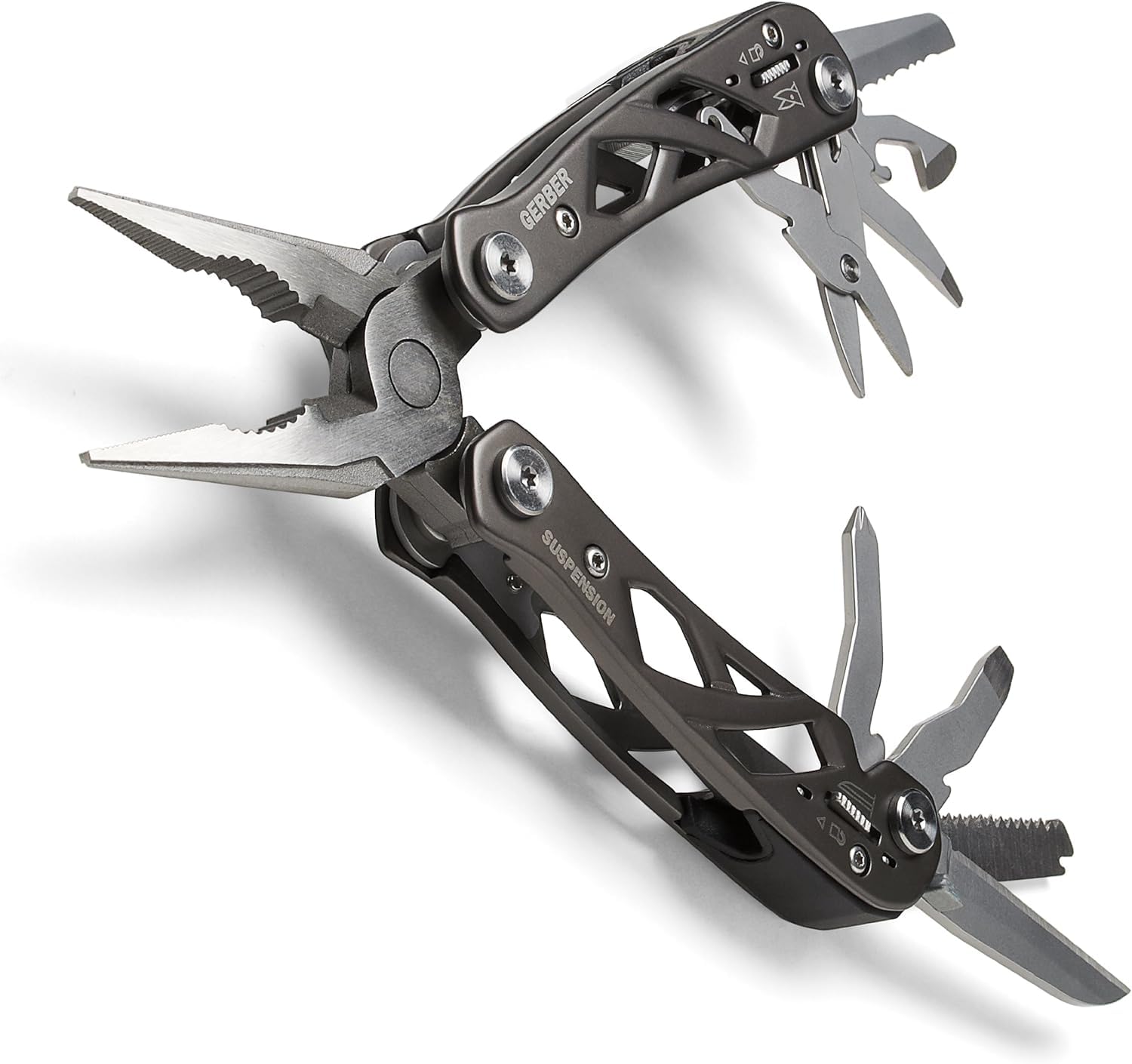
The Suspension NXT was redesigned with a small but meaningful detail: a reinforced lanyard hole molded into the aluminum frame near the butt of the closed handle. That hole is the difference between a clean tether and a sketchy improvised loop. Knowing where it is — and how much weight it can actually take — drives every decision below.
What You're Actually Working With on the Suspension NXT
Before you rig anything, look at the tool itself. The Suspension NXT has:
- A 6.7-ounce total weight (well below the 5-pound ANSI Class 1 ceiling)
- An integrated lanyard hole at the butt end, sized for a small carabiner or split ring
- An aluminum open-frame construction — do not thread cordage through the frame openings as a substitute for the lanyard hole
- A spring-loaded pliers mechanism that can pinch a loose lanyard if you rig sloppy
The lanyard hole is the only point on the tool that the manufacturer rates for tether attachment. Hooking your leash to a pocket clip, a belt sheath grommet, or a bit driver slot is how tools get dropped. If you're cross-shopping multitools and want to understand how tether geometry differs across brands, our Gerber Suspension NXT vs SOG PowerPint comparison breaks down the lanyard points on both.
ANSI/ISEA 121 and Z359.18 — The Standards You Need to Know
Two standards govern what you're doing here:
ANSI/ISEA 121-2018 covers dropped-object prevention solutions, including tool tethers, tool attachments, and containers. It defines a Class 1 tool tether as one rated for tools weighing 5 pounds or less — which is where a 6.7-ounce multitool sits comfortably.
ANSI Z359.18 covers anchorage connectors for active fall protection. Do not confuse the two: a Z359.18 anchor is for a worker's body harness, not for a hand tool. If you clip your Suspension NXT lanyard to your fall-arrest D-ring, you can foul the lanyard during a fall event — and that's how people get hurt.
The practical rule: tools tether to tool-rated attachment points (typically on a tool belt, scaffold belt, or dedicated tool-tether D-ring). Bodies tether to fall-arrest anchors. Keep the two systems separate.
Picking the Right Lanyard for a Sub-Half-Pound Multitool
For a tool this light, you have three serviceable lanyard styles:
Coiled retractable lanyard (24- to 48-inch extension)
The default choice. Stays out of the way when slack, extends to working reach, and rebounds when you stow the tool. Look for a Class 1 rating, a swivel on at least one end (prevents the lanyard from spinning your tool while you climb), and a captive-eye carabiner on the tool end so the tether physically can't migrate off the lanyard hole.
Bungee lanyard with shock absorber
Better for connectors working in tight column-and-beam pockets where a coiled lanyard catches on flange edges. Pick one rated for 5 pounds or less so the shock absorber actually engages at the right load.
Static webbing leash (fixed length)
Old-school but bombproof. No moving parts to fail, and you can match length to your reach exactly. Downside: it dangles, which means it catches on rebar and beam flanges.
Avoid paracord, boot lace, or any field-rigged cordage. It's not rated, it's not inspected, and it will not pass a competent-person audit. If you want a broader look at multitool ergonomics and feature trade-offs, see our essential multitool features guide.
Step-By-Step: Rigging the Tether to Your Scaffold Belt
Here's the actual sequence. Do this on the ground, not on the deck.
Step 1 — Inspect the lanyard hole
With the Suspension NXT closed, look at the butt end of the frame. The molded hole should be clean, with no metal burrs, no cracks radiating from the edge, and no deformation. A burr will saw through a soft webbing lanyard over time. File any sharp edge smooth with a fine needle file before you rig.
Step 2 — Choose your attachment hardware
Use a 4mm to 6mm captive-eye carabiner, a stainless steel split ring, or a girth hitch with rated webbing. A girth hitch is the cleanest connection because it self-tightens under load and adds no extra hardware to snag on flange edges. Pass the webbing eye through the lanyard hole, feed the rest of the lanyard through the eye, and pull tight.
Step 3 — Identify the scaffold belt attachment point
Most scaffold belts have one of three tool-tether-rated points:
- A dedicated tool tether D-ring (usually labeled, often colored differently from the fall-arrest D-ring)
- An ISEA 121 webbing loop sewn through the belt body
- A side ring on the hip pad rated for tool weights
Read the belt's label. If it doesn't explicitly list a Class 1 tool tether rating, do not clip the tool lanyard to it. Standard belt loops on a leather scaffold belt are not rated — they're for holding the belt closed.
Step 4 — Match lanyard length to working reach
Your fully extended lanyard should be just long enough to let you open the Suspension NXT's pliers at your normal working position. Too long and the tool swings into the structure when you stow it; too short and you fight the leash every time you reach. For most connectors and detail hands, a 24-inch retracted, 36-inch extended coiled lanyard is the sweet spot.
Step 5 — Test the rig before you climb
With the tool clipped in, drop it from waist height. The lanyard should catch the tool cleanly, the carabiner should not foul on your belt, and the tether attachment point should not visibly deform. If anything moves wrong, fix it on the ground.
Anchor Point Mistakes That Get Tools Dropped
Three failure modes show up over and over on incident reports:
Clipping to the wrong D-ring. The fall-arrest D-ring on a positioning belt is for your body. Putting a tool lanyard on it can foul during a fall and can mask wear on the dorsal ring during inspection. Use the dedicated tool ring.
Daisy-chaining lanyards. Connecting two lanyards together to extend reach voids the rating and adds three failure points. Buy the length you need.
Pocket-clipping the sheath instead of tethering the tool. A sheath clip holds the sheath to your belt. It does nothing to keep the tool in the sheath when you pull it out, open the pliers, and fumble it onto a beam.
Inspection Routine — Before Every Shift
Pre-use inspection takes about 30 seconds:
- Check the lanyard hole on the Suspension NXT for cracks, burrs, or wear at the contact point
- Inspect the lanyard webbing for fraying, fuzzing, melting (from welding sparks), or cuts
- Run the carabiner gate — it should snap shut crisply with no grit or hang-up
- Confirm the scaffold belt attachment point is still stitched, with no broken bar tacks
- Look at the swivel — if it doesn't rotate freely, replace the lanyard
Pull any tether out of service if anything fails the check. Lanyards are consumable; a $20 lanyard is cheaper than a dropped-tool incident. For broader EDC and multitool care habits that transfer to job-site use, our safe multitool use guide covers complementary best practices.
Welding, Cutting, and Heat Exposure
Ironworkers do a lot of work around hot metal. Nylon and polyester lanyard webbing will melt at slag temperatures. If you're tying off near a torch or welding stage, switch to a Kevlar or fire-rated lanyard for that task, keep the lanyard run on the opposite side from the heat, and inspect after every welding session — small spark burns aggregate into structural failure.
Cold-Weather Considerations
In sub-freezing temperatures, coiled lanyards stiffen and lose retraction force. The Suspension NXT's spring-loaded pliers also slow down. Test your rig in the conditions you'll work in, and consider a static webbing leash for winter work where retraction speed isn't reliable.
If You're Building a Tool-Tether Kit from Scratch
A reasonable ironworker tether kit looks like this:
- One Class 1 coiled lanyard with captive-eye carabiner (for the Suspension NXT)
- One backup static webbing leash (for welding shifts)
- A small parts bag with spare split rings and replacement carabiners
- An ISEA 121-rated belt or belt attachment if your current belt isn't tool-tether rated
If you're still narrowing down which multitool best fits this kind of working environment, our guide to picking the perfect multitool walks through frame strength, lanyard hole quality, and field-repair considerations side by side. That covers how to tether Gerber Suspension NXT for ironworkers from the ground up — lanyard geometry, belt rigging, and the inspection habits that keep the rig honest across a full season on the iron in 2026.
Frequently Asked Questions
Can I tether the Gerber Suspension NXT through its pocket clip instead of the lanyard hole?
No. The pocket clip is a stamped sheet-metal part attached with small screws — it's rated to hold the tool's weight while clipped in a pocket, not to take repeated drop-arrest loads. Always run the lanyard through the molded lanyard hole at the butt end of the frame.
What's the maximum drop distance an ANSI Class 1 tether can safely arrest a 6.7-ounce multitool?
ANSI/ISEA 121 Class 1 tethers are tested for tools up to 5 pounds. The Suspension NXT sits well under that ceiling, so a properly rated Class 1 coiled lanyard will arrest a drop at any working height an ironworker normally operates at. The limiting factor is usually swing radius and contact with structure, not the lanyard's load rating.
Is a girth hitch or a split ring better for connecting the lanyard to the Suspension NXT?
A girth hitch with rated webbing is generally preferred because it adds no hardware, can't accidentally unclip, and distributes load across the full molded eye. A split ring is faster to swap but can wear the molded hole over time and adds a possible snag point. Use whichever your belt manufacturer recommends.
Can I clip the tether to my fall-arrest harness D-ring if my scaffold belt has no tool ring?
No. The fall-arrest D-ring is rated for your body weight in a fall event, not for tool tethers, and clipping a tool there can interfere with fall-arrest function. If your belt has no tool-rated point, add an ISEA 121 tool attachment to the belt or upgrade the belt itself.
How often should I replace the lanyard on my multitool tether?
Replace any lanyard that fails pre-shift inspection, shows visible fraying or heat damage, or has arrested a drop. Even without visible damage, most manufacturers recommend retiring tool tethers after 12 to 24 months of daily use, sooner in high-UV or high-heat environments.
Will tethering void the Gerber Suspension NXT warranty?
Tethering through the manufacturer-provided lanyard hole does not void Gerber's warranty. Modifying the tool — drilling additional holes, removing the pocket clip to make a tether point, or attaching the lanyard to any non-rated feature — can void coverage.
Do I need a tether if I'm working below six feet?
OSHA's general dropped-object rules don't strictly require it below six feet, but most general contractors and ironworker locals require 100% tool tie-off at any elevated work, including scaffold platforms and elevated decks. Tether anyway — the habit pays off the day you forget you're at height.
Key Takeaways
- Choosing the right how to tether gerber suspension nxt for ironworkers means matching capacity and output ports to your actual devices
- Always check actual watt-hours (Wh), not just watts — runtime depends on Wh, not peak output
- Also covers: gerber suspension nxt tool tether
- Also covers: ironworker multitool lanyard scaffold
- Also covers: scaffolding belt multitool retention
- Compare price-per-Wh across models to find the best value for your budget