When comparing the leatherman wave plus vs gerber suspension nxt for arborists working with climbing spurs, the Wave+ wins on saw quality, plier strength, and one-handed blade access — the three things that actually matter sixty feet up a Doug fir. The Suspension NXT is lighter and cheaper, which makes it a tempting backup, but its butterfly frame flexes under cutting load and its saw blade is closer to a steak knife than a pruning tool. For a working climber strapped into gaffs and a saddle, the Wave+ earns the primary belt slot in 2026.
Why arborists on spurs need a different multitool than ground crews
Spur work is a fundamentally different problem from ground rigging. You are on a single attachment point, gaffed into the cambium, holding tension with your flipline, and you almost never have a free second hand. Any tool you pull from your saddle has to open, lock, and cut with the hand that is holding it — full stop. The other hand is on the lanyard, the chainsaw lanyard, or the trunk itself.
When shopping for leatherman wave plus vs gerber suspension nxt for arborists, it pays to compare specs, capacity, and real-world runtime before committing.
That eliminates a lot of multitools immediately. Anything that requires a two-hand butterfly opening, anything with slip-joint tools that flex under load, and anything without a positive blade lock should not be on a climbing harness. Drop a tool from sixty feet and you have created a kill zone for the ground crew.
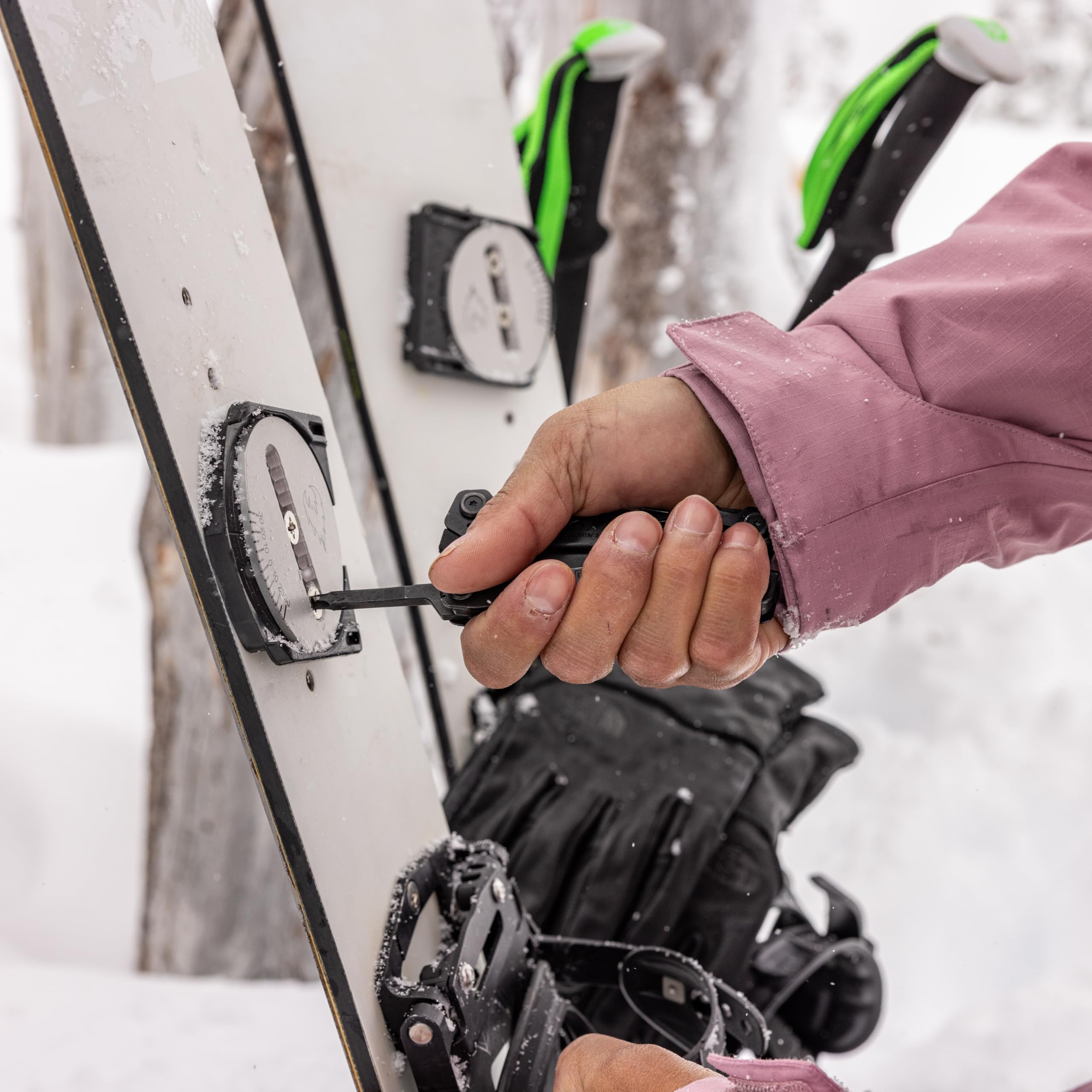
You also need a saw blade that can actually cut green wood. Most multitool saws are designed for dry softwoods and pine planks. A real pruning task — clearing a sucker, notching a tag line guide, freeing a stuck rigging block — wants aggressive tri-cut teeth and a blade long enough to clear a 1.5-inch limb in two strokes.
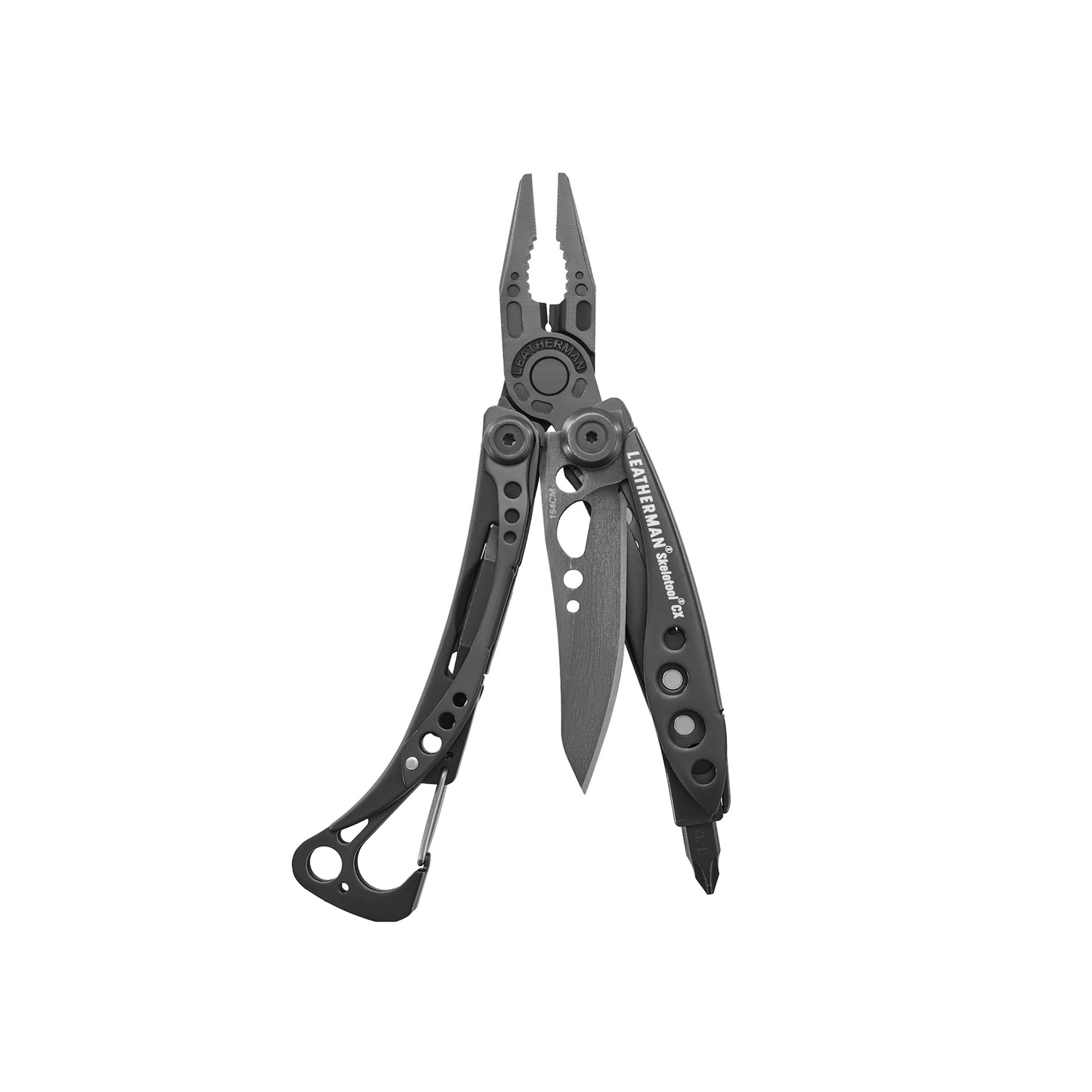
Head-to-head specifications
| Spec | Leatherman Wave+ | Gerber Suspension NXT |
|---|---|---|
| Weight | 8.5 oz | 5.5 oz |
| Closed length | 4.0 in | 3.6 in |
| Open length | 6.3 in | 6.0 in |
| Plier frame | Solid stamped, full-tang | Open butterfly, partial frame |
| One-handed blade | Yes (outside access, thumb stud) | No (inside access, requires opening frame) |
| Blade lock | Liner lock, all four main blades | Slip-joint on most secondary tools |
| Saw blade | Replaceable, aggressive wood teeth | Fine-tooth, fixed |
| Wire cutter | Replaceable hard-wire cutters | Fixed, soft-wire only |
| Warranty | 25-year | Limited lifetime |
| Typical 2026 price | $100–$120 | $35–$45 |
The plier-frame difference matters more than you think
The Wave+ has a stamped, full-tang plier frame — a single piece of steel that the handles fold around. When you bite into a stuck rigging shackle or pull a buried staple from cambium-grown bark, the load goes straight through that frame.
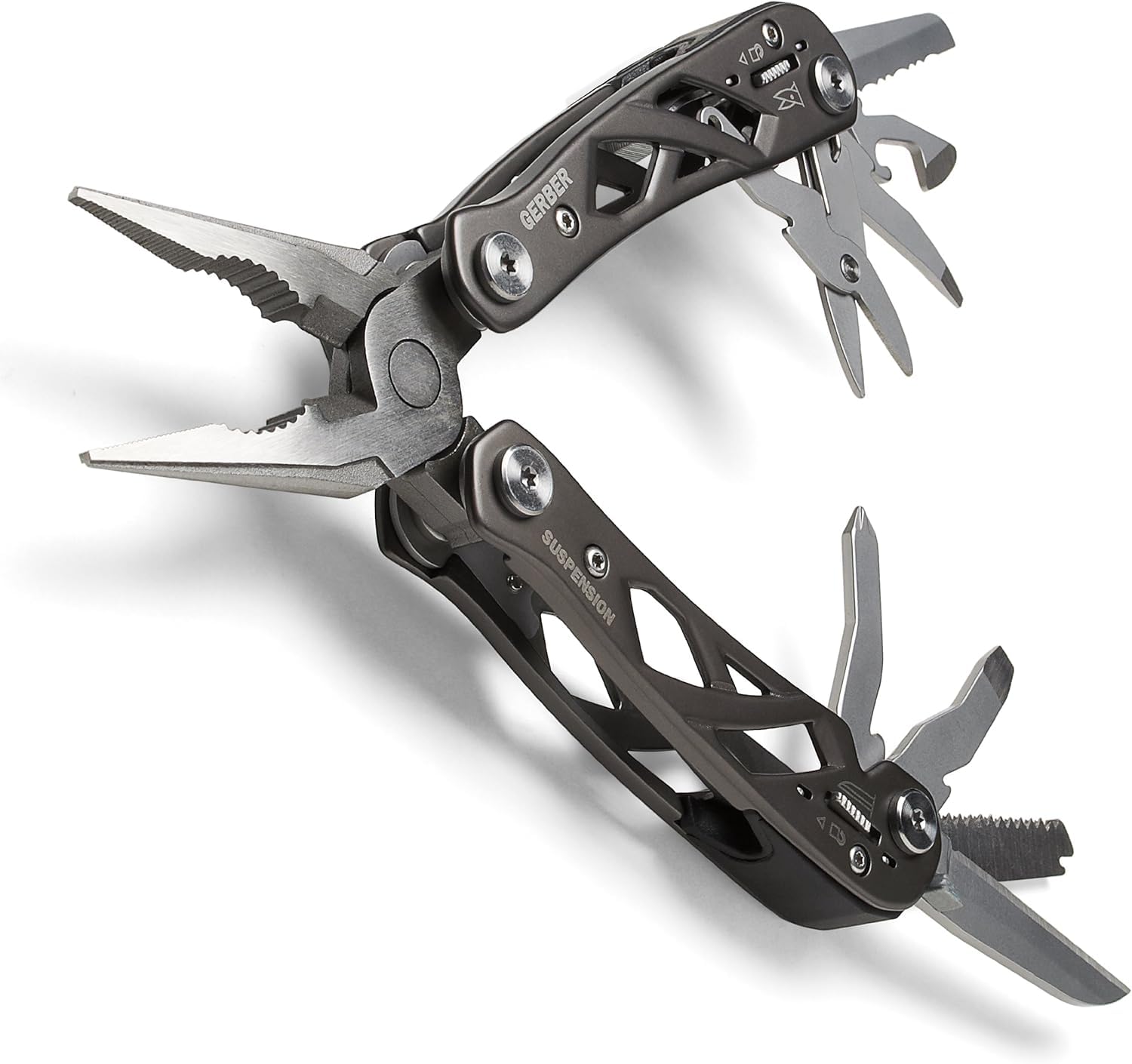
The Suspension NXT uses Gerber's signature open-frame butterfly design. It is clever, lightweight, and lets you deploy the pliers with a wrist flick. But there is a tradeoff: under sustained squeezing load, the open frame flexes. You will feel it on anything thicker than 10-gauge wire. For an arborist who occasionally uses pliers as a finishing tool, it is fine. For someone pulling out broken zip-line cable ends or rebar from a stump, it is not enough.
One-handed access is non-negotiable on a saddle
This is the single biggest functional gap between these two tools, and it is why working climbers gravitate to the Wave+.
The Wave+ puts its four main blades — knife, serrated knife, saw, and file — on the outside of the closed tool. You flick them open with a thumb stud, one hand, while you are still gaffed in. Each blade has a liner lock. You close them with a thumb release, also one-handed.
The Suspension NXT hides everything inside the butterfly frame. To use the knife, you open the pliers, fold the handles back, and dig the knife out of the slot — a two-hand operation. In a saddle, with one hand on a lanyard, that is the moment you either drop the tool, drop the limb, or both.
Saw blade comparison: where the price gap shows
If you are going to use a multitool saw for anything beyond opening boxes, this is the section that matters.
The Wave+ saw is replaceable, runs about 2.6 inches of cutting edge, and uses an offset tri-cut tooth pattern that pulls through green wood. It will not replace your handsaw, but it will clear a 1-inch sucker in maybe eight strokes. When the teeth dull, you swap the blade — Leatherman sells replacements for around $12.
The Suspension NXT saw is shorter, fixed, and uses a fine cross-cut pattern designed for soft wood and plastic. On green hardwood it binds, on softwoods it works but slowly, and when it dulls you are done. For an arborist, this is the deal-breaker. You are going to use that saw, and you want it to work.
Where the Suspension NXT actually wins
It is not all one-sided. There are real reasons to put a Suspension NXT on a climbing harness:
- Backup duty. At a third of the price, you can lose one without it ruining your month. Drop a Wave+ off the top of a 90-foot pine and you are filing an insurance claim or eating $110.
- Weight on the harness. Three ounces matters when you are hanging in a saddle for six hours. If you are already carrying a dedicated handsaw, a Silky Pocketboy, and a stub pruner, the lighter NXT makes sense as the everything-else tool.
- Ground crew use. For the groundie who is mostly cutting twine, prepping ropes, and handling rigging knots, the NXT is plenty of tool. Save the Wave+ for the climber.
Picks for specific arborist use cases
Best primary multitool for the climber on spurs
The Leatherman Wave+ is the right answer. Outside-access locking blades, a saw worth using, and a plier frame that will not flex when you bite into a shackle. Pair it with a Kevlar-stitched belt sheath so it does not migrate around your saddle, and run the lanyard hole — Leatherman ships one — to a small bungee on your harness D-ring. If you have never owned one, our full Leatherman Wave+ review walks through the everyday-carry case in more detail.
Best backup for the climber's bridge bag
The Gerber Suspension NXT earns this spot. It is light enough to forget about, the pliers are fine for emergency wire work, and the price means you will not mourn it if it gets ejected on a rigging fall. Keep it in a side pocket of the bridge bag, not on a tool lanyard — backups do not need to be deployable in two seconds.
Best multitool for the ground crew
Either tool works, but the Suspension NXT is the smart-money pick for groundies. Most ground tasks are knot-cutting, zip-tie work, and adjusting rigging hardware that is already tensioned by the climber. You do not need outside-access blades when you have both hands free. Save the budget for chaps, helmets, and a better handsaw.
Other gear to think about for spur work
A multitool is one slot in a saddle full of tools. Before you finalize your kit, it is worth thinking about the rest of the system: what is on your belt, what is on a lanyard, and what stays in the bridge bag. Our guide to using multitools safely covers the lanyard-and-lock habits that keep tools from becoming projectiles. If you are still narrowing down between models, our 2026 multitool roundup compares both of these against the rest of the field.
How to set up either tool for climbing
Whichever you pick, the setup is the same:
- Lanyard the tool. A short bungee lanyard — 12 to 18 inches — from the tool's lanyard ring to a harness D-ring. Not a static line. A static lanyard turns a dropped tool into a pendulum that hits your shin at terminal velocity.
- Mount the sheath where you can find it blind. Most climbers run the multitool on the dominant-hand side, just behind the hip, where the hand falls naturally when not holding a lanyard.
- Keep the blade closed when ascending. Open blades catch on fliplines and stitching. Open the tool only when you have stopped to work.
- Rinse and dry after wet days. Pitch, sap, and rainwater turn pivots into rust factories. A weekly wipe-down with mineral oil keeps the action smooth — the same rules apply as in our multitool and flashlight maintenance guide.
The bottom line
If you are an arborist working on spurs and you are buying one multitool, it is the Wave+. The locking blades, the usable saw, and the rigid plier frame are worth the extra fifty or sixty dollars, and you will get a decade of use out of it. The Suspension NXT is the better backup, the better groundie tool, and the better second multitool — but it is not the one that lives on the climbing saddle.
The leatherman wave plus vs gerber suspension nxt for arborists question really comes down to where the tool is going to live. On the saddle, in the air, with one hand free? Wave+. In a side pocket, in the truck, on the groundie's belt? NXT. Most working climbers, eventually, end up with both.
Frequently Asked Questions
Can the Leatherman Wave+ saw cut green wood for arborist work?
Yes, within reason. The Wave+ saw will clear suckers and small limbs up to about an inch and a quarter in diameter without complaint. It is not a substitute for a dedicated handsaw like a Silky Pocketboy — the blade is only 2.6 inches long and the cut depth is limited — but it is the best saw on any folding multitool currently sold, and the replaceable blade means you can refresh it once a season.
Is the Gerber Suspension NXT strong enough for trunk rigging hardware?
For most light rigging hardware, yes — adjusting block carabiners, opening rigging shackles, cutting tag lines. For pulling buried staples, prying stuck rigging plates, or torquing seized bolts on a chipper, no. The open butterfly frame flexes under sustained load. Use it for finesse tasks, not brute-force ones.
Do either of these multitools have a gut hook or rope splice tool for arborists?
Neither tool has a true gut hook. The Wave+ has a fine-edge knife that handles rope cleanly, and the file can be used as an improvised rope splice fid for 12-strand rope in a pinch. The Suspension NXT has only a basic blade. If you regularly splice climbing rope, carry a dedicated fid — neither multitool is built for that job.
Which multitool is safer to carry on a climbing saddle?
The Wave+ is significantly safer because every primary blade locks. A lanyarded Wave+ that swings against a tree will not unfold. The Suspension NXT uses slip-joints on most secondary tools, which means a hard impact can partially open them inside the frame. Always lanyard whichever tool you carry, and keep the blades closed during ascent and descent.
How often should I oil my multitool when working in pine sap?
After every wet or sappy day, at minimum. Pitch turns to glue inside pivots within 48 hours, and once the joints stiffen you are at risk of one-handed deployment failing — which on a saddle is a real safety issue. A toothbrush, a rag, and a few drops of mineral oil or light machine oil takes about three minutes and doubles the working life of the tool.
Is the Wave+ Heritage edition worth the upgrade for climbing work?
Functionally, no. The Heritage edition has nicer scales and a richer finish, but the tools, blade steel, and lock geometry are identical to the standard Wave+. If you are going to scratch it on bark, gouge it on spurs, and drop it from height, the standard model is the smart buy. Save the Heritage for the desk-bound EDC crowd.
What is the realistic lifespan of a Wave+ in active arborist use?
Working climbers report seven to ten years of daily use before the pivots loosen enough to retire the tool. Saw blades get replaced every season or two. Knife edges get touched up monthly. The plier jaws are the slowest to wear — most climbers retire a Wave+ for a loose pivot, not a failed cutter. The 25-year warranty covers manufacturing defects, but normal wear from climbing is on you.
Key Takeaways
- Choosing the right leatherman wave plus vs gerber suspension nxt for arborists means matching capacity and output ports to your actual devices
- Always check actual watt-hours (Wh), not just watts — runtime depends on Wh, not peak output
- Also covers: best multitool tree climber arborist
- Also covers: wave plus vs suspension nxt arborist
- Also covers: arborist edc multitool comparison
- Compare price-per-Wh across models to find the best value for your budget