The Nitecore MH12 for Coast Guard Auxiliary harbor patrol hits a hard-to-match middle ground for volunteer crews: it is compact enough to ride on a PFD shoulder strap, bright enough to identify a hull number from across a fairway, and sealed well enough to shrug off the spray that comes with every safety boarding. If you are a flotilla member assigned to night ops, recreational boating safety checks, or radio guard at a marina, the MH12 family (the long-running classic, the v2, and the newer Pro variants) gives you the runtime, the throw, and the rechargeability that a typical AUX shift demands without forcing you into a bulky duty light.
This 2026 buyers guide walks through what to look for in an MH12 for harbor patrol, how the light pairs with the rest of your kit, and how it stacks up against the other handhelds Auxiliarists usually consider when standing up a new patrol bag.
Why the Nitecore MH12 suits Coast Guard Auxiliary harbor work
Auxiliary harbor patrol is not the same job as a fire-rescue night operation or a tactical entry, and that is good news for the MH12. Most of what an AUX volunteer needs a light for falls into a few buckets:
- Vessel identification at distance — reading a hull number, transom name, or registration sticker from 50–150 yards.
- Boarding and safety check work — illuminating fire extinguishers, flares, registration cards, and PFDs inside someone else’s cockpit or cabin.
- Person-in-water search support — sweeping water for a head, a hand, or a reflective strip while not blinding the helm.
- Navigation aid checks — confirming a buoy light is functioning, or that a private aid is mis-marked on the chart.
- Backup signaling — flashing a beacon to mark your position to a passing freighter or a partner craft.
- Always rinse the body and threads with fresh water at the end of a salt-exposed patrol. Salt creep around the tail-cap threads is the most common reason a “waterproof” light eventually fails in marine service.
- Lubricate the O-rings every 30–60 days with a thin film of silicone grease. The MH12 ships with spare O-rings for a reason.
- Keep the USB-C charge port cover fully seated and inspect it for grit before closing. The port is the weakest waterproofing point on any rechargeable light.
- Turbo (1000–1200 lm): short bursts only — vessel ID and distance sweeps. Will overheat and step down in 1–3 minutes.
- High (~400 lm): 2–3 hours of continuous run, which is plenty for a typical boarding.
- Medium (~150 lm): 6–8 hours, ideal for cabin and cockpit work.
- Low (~40 lm): 20+ hours, your default radio-guard mode at the marina.
- Ultra-low / moonlight: chart reading without destroying night vision.
- Never sweep a white light across another vessel’s helm at night. You will blind the operator and create a navigation hazard. Use the lowest mode that gets the job done.
- Do not use strobe near commercial traffic unless it is a genuine emergency signal. Strobes can be mistaken for malfunctioning navigation aids.
- Carry a red filter or a secondary red light for chart and electronics work to protect your night-adapted vision.
- PFD strap clip — the bezel-down clip rides well on a PFD shoulder strap and stays put through boat motion and boarding ladders.
- Tail lanyard with a quick-release — keeps the light tethered when you are leaning over the gunwale to read a transom name.
- Belt holster — Nitecore’s NCP30 holster fits the MH12 and works on a duty or work belt for shore-side patrols.
- Cargo pocket with the clip exposed — fine for boat-only ops, not great for boardings where you need a fast draw.
- A 1xAAA or 1xAA penlight for chart-table reading and gauge inspection in the wheelhouse.
- A small, IPX8 headlamp for hands-free engine compartment work or knot tying at night.
- A red-only secondary light for helm and radio-guard duty to preserve night vision.
- A chemical lightstick in your PFD pocket as a last-ditch person-in-water marker.
The MH12 nails the first three jobs because it pairs a Cree XP-L (classic) or Luminus SST-40 (Pro) emitter with a deep, smooth reflector. That beam shape gives you a focused hotspot for distance work plus a generous spill for close-in cabin checks. On harbor patrol, beam profile matters more than raw lumens — a wall-of-light flooder washes out spray and ruins your dark adaptation, while the MH12’s tighter throw lets you punch through fog without lighting up the entire foredeck.
Waterproofing and durability for the wet environment
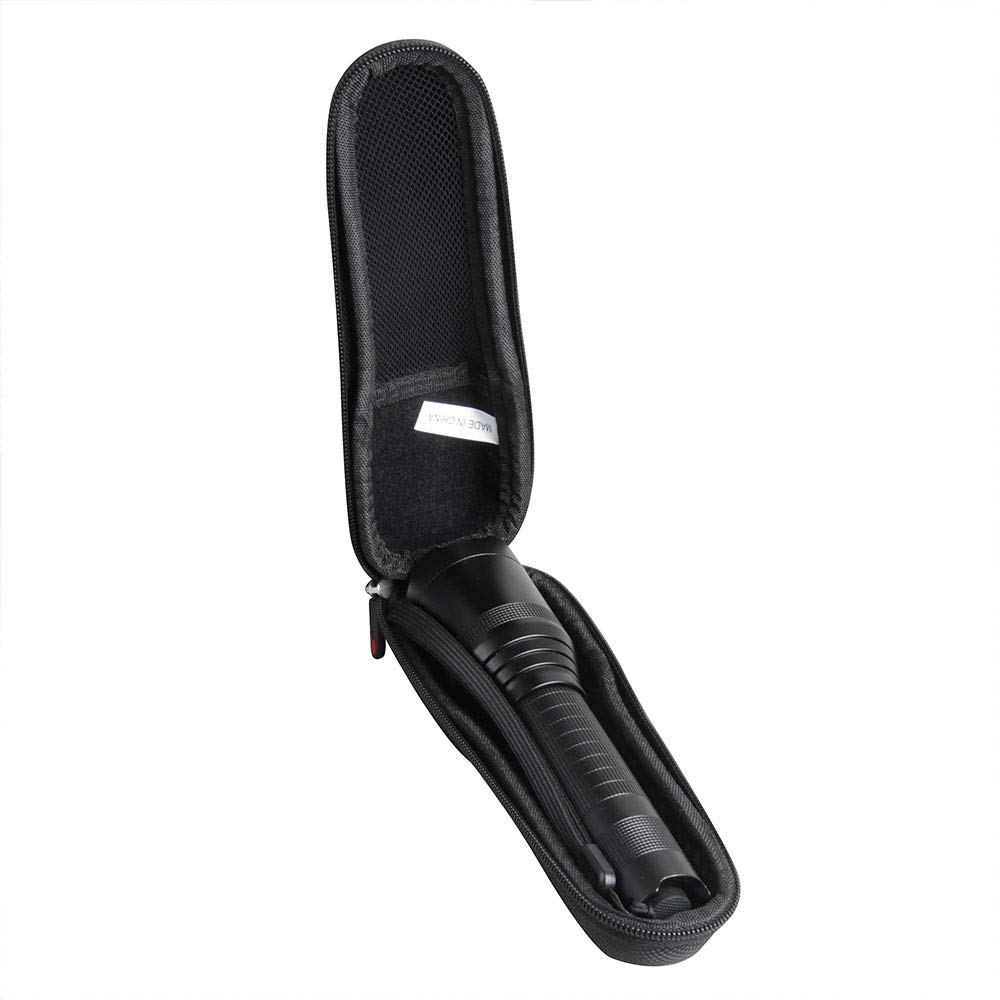
The MH12 line is rated IPX8 to 2 meters, which is the right rating for an open-cockpit RB-S or a small craft where green water can come over the bow. That rating means full submersion for 30 minutes at 2 meters — survival of an accidental drop overboard while leaning out to grab a heaving line, plus routine resistance to driven rain and salt spray.
A few cautions every AUX volunteer should know:
For more on saltwater care and storage between patrols, our flashlight maintenance guide covers the routine that keeps a coastal light running for years.
Runtime, batteries, and a realistic patrol shift
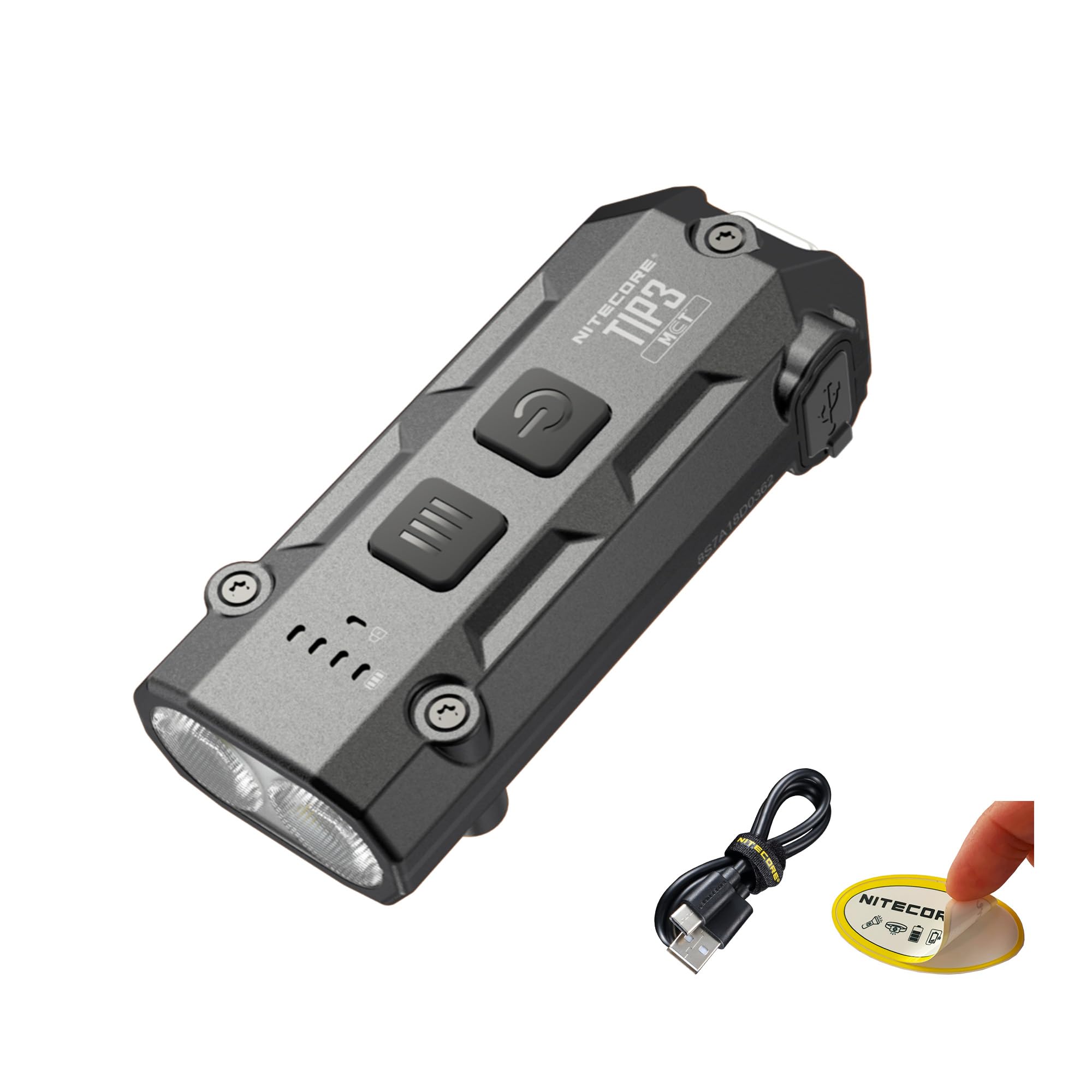
A typical AUX harbor patrol is 4–8 hours, and most of that time the light is off or on its lowest mode. The MH12 ships with a 3400 mAh 18650 cell and charges via USB-C directly in the body — meaning you can top off from a 12 V cigarette socket adapter at the helm without carrying a separate charger.
Real-world expectations for a single 18650:
Carry a spare protected 18650 in a waterproof pill bottle in your patrol bag. The MH12 will also run on a pair of CR123A primaries in a pinch, which is worth knowing if you are forward-deployed for a regatta or a marine event watch and have no way to charge. For squeezing the most life out of each cell between shifts, our guide to maximizing flashlight battery life covers temperature, storage voltage, and cycle habits in detail.
Beam, signaling, and helm courtesy
One MH12 quirk Auxiliarists appreciate is the dual-switch interface: a tail switch for momentary and on/off, plus a side switch for mode changes and instant strobe. On a moving boat, with one hand on a rail, you can flick strobe without fumbling — useful for signaling to a vessel that has not seen you, or for marking a position to a partner craft.
That said, a few hard rules for harbor use:
How the MH12 compares to other harbor-patrol candidates
The MH12 is not the only handheld an AUX volunteer might consider. Here is how the most common alternatives line up for harbor work:
| Light | Max lumens | Throw | Waterproof | Charging | Best for AUX use |
|---|---|---|---|---|---|
| Nitecore MH12 (current) | ~1200 | ~230 m | IPX8 (2 m) | USB-C onboard | General patrol, boarding, ID work |
| Streamlight ProTac HL | ~1000 | ~270 m | IPX7 | CR123A or 18650 | Backup / glovebox light |
| Fenix PD35 V3 | ~1700 | ~360 m | IP68 | External charger | Long-throw vessel ID |
| SureFire E2D Defender | ~1000 | ~218 m | IPX7 | CR123A only | Hard-use backup |
The MH12 wins for most flotilla members because the onboard USB-C charging eliminates the need for a separate charger bay at the AUX station, and the IPX8 rating is the most appropriate for open-water exposure. If you want a side-by-side breakdown against the Streamlight option that many marine units already issue to crews, our MH12 vs ProTac HL comparison walks through every spec and use case.
How to carry the MH12 on patrol
Most AUX volunteers wear an inflatable PFD (Type V) over a uniform shirt or float coat. The MH12 ships with a pocket clip and a lanyard hole; here are the carry options that work in practice when you are choosing the Nitecore MH12 for Coast Guard Auxiliary harbor patrol kit assembly:
Backup lights every AUX patrol should carry
Even the best primary light needs a backup at sea. The MH12 should be paired with at least one of these:
Frequently Asked Questions
Is the Nitecore MH12 waterproof enough for open-water Coast Guard Auxiliary patrols?
Yes. The MH12 is rated IPX8 to 2 meters, which covers full submersion for 30 minutes at that depth. That is sufficient for an accidental drop overboard from a small AUX facility and for routine spray and rain exposure on harbor patrol. Rinse with fresh water after every salt exposure and inspect the O-rings monthly to keep that rating intact over the life of the light.
What is the best mode to use on the Nitecore MH12 during a vessel boarding at night?
For most boardings, the medium (~150 lm) mode is the right starting point — it lights the cockpit without blinding the operator. Step down to low (~40 lm) once you are inside the cabin reading registration cards or flare expiration dates. Save turbo for distance hull-number reading on approach, not for close work.
Can I charge the Nitecore MH12 from a 12 V boat outlet during patrol?
Yes. The MH12 charges via USB-C on the body, so any 12 V to USB-C adapter at the helm will top off the cell during a shift. Plan on roughly 3.5–4 hours for a full charge from a depleted 3400 mAh cell at standard USB-C speeds, or carry a spare 18650 and do a hot-swap if you cannot wait.
How does the Nitecore MH12 compare to the Fenix PD35 V3 for harbor patrol?
The PD35 V3 throws further and runs at higher peak lumens, which can be an advantage for long-range vessel ID on a wide bay. The MH12 wins on USB-C onboard charging, IPX8 rating, and a more pocketable body. For most flotilla members the MH12 is the better all-day patrol light; for long-throw needs the PD35 V3 is the upgrade. Our Fenix PD35 V3 review covers that model in detail.
Will the Nitecore MH12 run on CR123A batteries if the 18650 dies on patrol?
Yes. The MH12 accepts two CR123A primary cells as a backup chemistry. Carry two in a waterproof container in your patrol bag — they are shelf-stable for a decade and will get you through the rest of a shift if the 18650 is depleted and you have no way to charge before returning to dock.
Is the strobe mode on the Nitecore MH12 appropriate for marine signaling?
The strobe is a self-defense feature, not a recognized marine distress signal. Use it only to attract attention in a genuine emergency, never as a routine signaling tool. For routine signaling to other AUX craft or to a vessel you are hailing, use steady white light at low or medium output and follow your standard hailing procedures.
How should I store the MH12 between patrols?
Store at room temperature with the 18650 at roughly 60–80% state of charge if it will sit for more than two weeks. Loosen the tail cap a quarter turn to break the circuit and prevent parasitic drain. Keep a thin film of silicone grease on the O-rings and store away from direct sunlight to extend O-ring life.
Bottom line for AUX volunteers
The Nitecore MH12 for Coast Guard Auxiliary harbor patrol earns its slot in a flotilla member’s kit by being the right size, the right rating, and the right interface for the job. It is not the brightest light on the market, and it is not the longest-throwing — but for a 4–8 hour patrol of vessels, navigation aids, and boardings in a wet environment, it is one of the best-balanced handhelds you can carry. Pair it with a small headlamp, a CR123A backup pair, and a red helm light, and you have a kit that will serve through dozens of shifts a year on the water.
Key Takeaways
- Choosing the right nitecore mh12 for coast guard auxiliary harbor patrol means matching capacity and output ports to your actual devices
- Always check actual watt-hours (Wh), not just watts — runtime depends on Wh, not peak output
- Also covers: best edc flashlight coast guard auxiliary
- Also covers: nitecore mh12 marine patrol use
- Also covers: harbor patrol volunteer flashlight
- Compare price-per-Wh across models to find the best value for your budget