The Olight S2R Baton II for overnight vet techs is one of the quietest, gentlest pocket lights you can carry through a kennel run at 2 a.m. Its 0.5-lumen moonlight mode reveals a sleeping dog's chest rise without waking the rest of the ward, its magnetic tailcap docks silently to any metal cage or surgical cart, and its near-silent side switch avoids the loud tactical click that startles recovering animals. For a job where you measure success in undisturbed sleep, body-language reading, and not stepping on a tail in the dark, this 1,150-lumen rechargeable EDC light hits an unusually narrow brief. This guide walks through what makes the S2R Baton II suited to overnight veterinary work, how to set it up before your first shift, and what to consider when comparing it to other small EDC torches.
Why overnight kennel work needs a different flashlight
Daytime techs deal with bright fluorescent wards and obvious problems. Overnight techs deal with dim red night-lights, anxious post-op patients, and dogs who haven't slept well for three days. A flashlight that's wrong for the job will wake every animal in the run, blind a cat recovering from corneal surgery, and earn you a glare from the veterinarian asleep in the on-call room. The right flashlight makes you nearly invisible: a moving pool of warm light that checks IV bags, surgical drains, urine output trays, and respiratory rates without changing the room's acoustic or visual baseline.
Three demands shape this category. First, the lowest mode has to be genuinely low — single-digit lumens or below — so you can read a chart-clipped sticker an inch from a snoozing patient. Second, the user interface needs to wake silently and never accidentally fire on a high mode that flashes 1,000 lumens into a recovery cage. Third, the form factor has to clip to scrub pockets, ride on a magnetic surface, or sit in a hand alongside a stethoscope and a temperature probe without becoming a juggling act.
How the Olight S2R Baton II answers that brief
The Olight S2R Baton II for overnight vet techs earns its place because every design choice converges on quiet, controllable light. The moonlight mode lasts roughly 50 days on a single charge, which means you can drop it to 0.5 lumens at the start of your shift and never touch it again unless you genuinely need to see more. The side switch is a soft electronic button with a faint tactile click — nothing like the spring-loaded rear clickies on tactical lights that announce your arrival three cages away.
The magnetic tail is the feature most working techs end up loving. Stick it to the top of a stainless steel cage door, aim it down at an angle, and you have hands-free light over a treatment table or kennel floor while you re-bandage a paw or coax a pill into a wary cat. The same magnet holds it against the side of a wet table, a surgical light arm, or the metal frame of an oxygen cage. Because it's a proprietary magnetic charging contact, you can clip the charging cable to it once a week and skip wrestling with USB-C ports in the dark.
The TIR optic produces a flood-heavy beam with a soft hot center, which is exactly what you want for indoor work. You're not throwing a beam 200 yards across a pasture — you're filling a 6-foot-square kennel with enough light to count breaths. A throw-heavy beam would blind animals and bounce harshly off white tile.
Setting it up for your first overnight shift
Before the first shift, do three things. First, disable the strobe by holding the side switch with the light off; the S2R Baton II remembers mode lockout and last-used setting, so configure once and forget. Second, set last-used mode to moonlight or low so single-clicking wakes the light at a safe brightness — the default "return to last used" behavior is your friend. Third, replace the stock pocket clip orientation if you tend to clip it bezel-down in a scrub-top pocket; bezel-down keeps the head accessible for thumb-press one-handed activation while your other hand is on an animal.
Charge it at the start of the week. The proprietary magnetic cable snaps on through fabric or in low light, which matters in a break room at 3 a.m. when you're trying not to drop anything. A full charge from the 3,200 mAh 18650 takes about 3.5 hours, and the cable's status LED flips from red to green when it's done.
For more on running a battery-powered EDC light through long shifts without a midnight surprise, see this guide to maximizing flashlight battery life. The same general principles — favor low modes, charge proactively, avoid leaving the light on high in a pocket — apply directly to kennel work.
What it does well in the ward
The S2R Baton II is genuinely small. At about 4 inches long and just over 2 ounces, it disappears in a scrub-top pocket and doesn't pull the fabric down. Vet techs who've carried bigger 21700 lights describe a noticeable difference in pocket fatigue across a 12-hour shift. The textured aluminum body resists slipping even when your hands are wet from a bath or a fluid line, and the IPX8 rating means a splash from a flushed catheter line won't kill it.
The mode spacing — 0.5, 12, 60, 300, 1,150 lumens — is well-judged for indoor medical work. Moonlight is for sleeping patients, 12 is for general kennel walks, 60 is enough to read a chart or assess a wound dressing, 300 is enough to inspect a cage floor for accidents or vomit, and 1,150 is for the rare moment you need to chase a loose ferret behind a treatment table. You almost never need turbo, which is honest.
Timed turbo (the light steps down from 1,150 lumens after about 90 seconds to prevent overheating) is a non-issue for this use case — you're never running it on turbo long enough to matter.
What to watch out for
The S2R Baton II is not perfect for every overnight vet tech. A few honest caveats:
The proprietary charger means if you forget the magnetic cable at home, you can't borrow a USB-C cable from a coworker. Keep a spare in your locker or car. The neutral white tint runs slightly cool — if you specifically need a high-CRI light to evaluate gum color or mucous membrane perfusion, this isn't the right tool, and you'd want a dedicated high-CRI penlight for triage work. The pocket clip is two-way but not deep-carry; it'll show above the pocket line on a scrub top, which some workplaces prefer for visibility anyway.
Finally, the side switch's electronic nature means it draws a tiny parasitic current. If you store the light unused for months, the battery will eventually drain. For daily-carry techs this is irrelevant, but if you keep a backup in a drawer, top it up monthly. For broader context on keeping any EDC light healthy across years of use, the EDC flashlight maintenance guide covers cleaning the magnetic contact, battery storage, and O-ring care.
How it pairs with the rest of a vet tech's EDC
A working overnight tech usually carries a stethoscope, a digital thermometer, bandage scissors, a Sharpie, a hemostat, a penlight, and a flashlight. The S2R Baton II covers the general-purpose flashlight role but doesn't replace a dedicated pupil-response penlight — those need a very specific narrow beam and tint. Think of the Baton II as the ward-walking, drug-cabinet-reading, kennel-checking light, not the clinical-exam light.
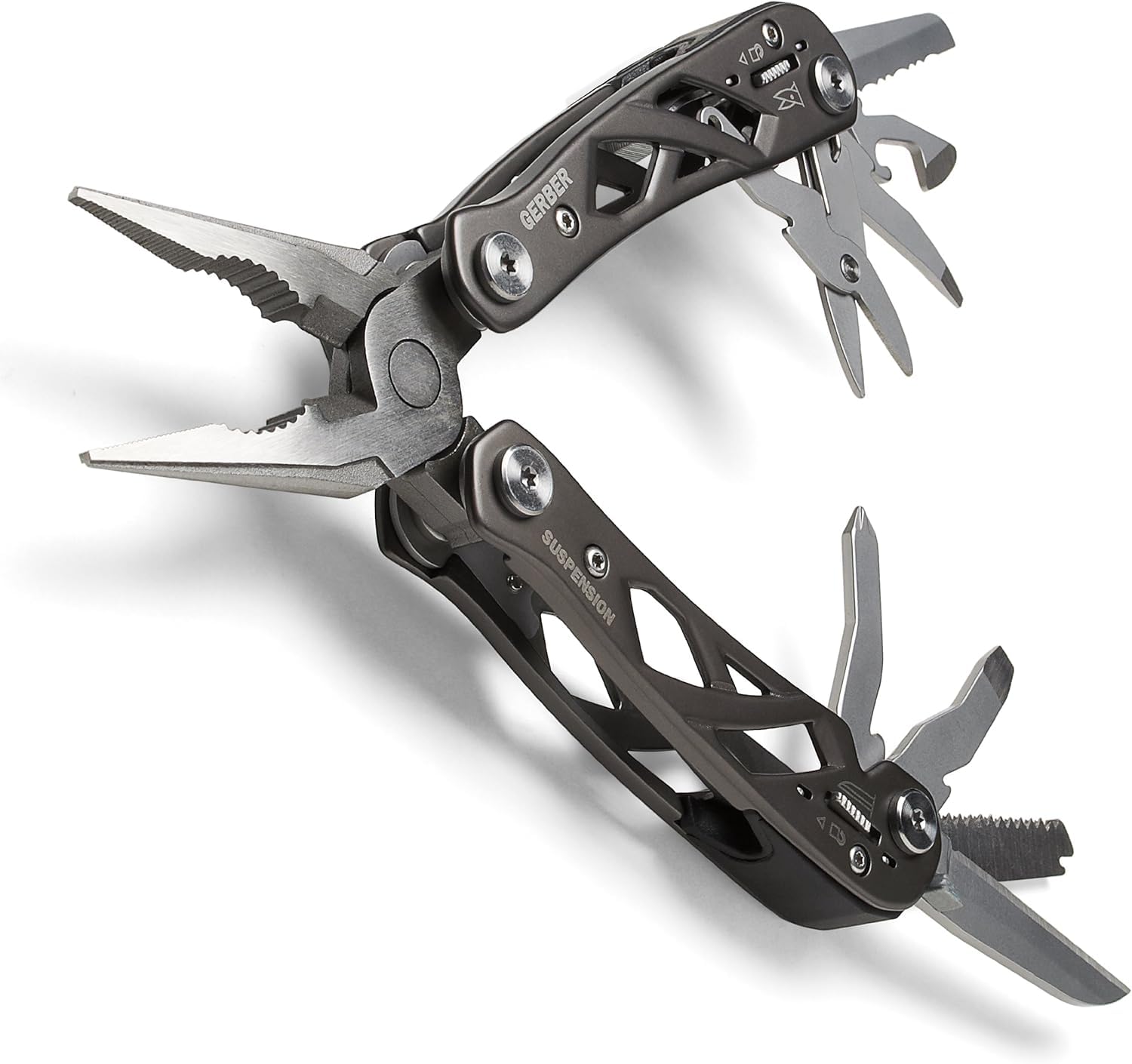
For the rest of the kit, a small multitool with sharp scissors and a fine flathead handles bandage changes, IV pump tweaks, opening packaging, and the occasional broken cage latch. If you carry a multitool already, the Baton II's pocket clip rides happily on the opposite scrub pocket and doesn't compete for real estate.
Readers comparing similar work-shift setups in adjacent fields may find the dedicated S2R Baton II writeup for nurses useful — much of the silent-mode, scrub-pocket reasoning carries over directly. For a deeper feature-by-feature look independent of any single use case, the full Olight S2R Baton II review goes into runtime testing, beam shape, and warranty experience.
Comparing it to other small EDC torches
Within the pocket-rechargeable category, the Baton II's competitors usually fall into two camps: lights with deeper throw and louder tactical switches (less suited to a quiet ward), and lights with simpler UIs and no magnetic charging (which gives up the hands-free kennel-mounting benefit). The Baton II sits in a small middle ground that happens to match overnight kennel work almost coincidentally — Olight designed it as a general EDC light, not a vet-specific tool, but the features align.
If you want to see how it stacks up against other popular small lights, the guide to choosing the best everyday carry flashlight walks through the broader trade-offs — output, runtime, UI, beam profile, and durability — without locking you to any one brand.
Buying considerations for 2026
The S2R Baton II has technically been superseded in Olight's lineup by newer Baton variants, but it's still widely available and often discounted as older stock moves through. In 2026, that makes it one of the better value picks in the small-rechargeable category if you can find it new. Look for kits that include the bundled magnetic charger and a 3,200 mAh 18650; the light only works with Olight's button-top proprietary cells for charging through the magnetic contact, so a bare-light deal without the battery may end up costing more than the kit.
Check return policies if you're buying through a marketplace listing rather than Olight direct. Counterfeits exist, though they're less common for this model than for the flagship Warriors. Authorized resellers and the Olight USA store both carry warranty support; unknown third-party sellers may not.
Bottom line for overnight vet techs
The Olight S2R Baton II for overnight vet techs is a quiet, hands-free, deeply-dimmable pocket light that genuinely respects sleeping patients. It's not a clinical exam tool and it's not a tactical torch — it's the ward-walking, kennel-checking, IV-bag-reading light that you forget you're carrying until you need it, and then it does exactly what you need without waking anyone. For a 12-hour overnight shift in a quiet ward, that's the entire job description.
Frequently Asked Questions
Is the Olight S2R Baton II quiet enough not to wake sleeping animals?
Yes, in practice. The side switch makes a faint tactile click that's significantly quieter than tail-clicky tactical lights, and because you can configure it to wake on moonlight mode by default, there's no startling flash of bright light when you turn it on near a sleeping patient. The light itself is silent — no fan, no audible electronics — so the only sound is your own footsteps.
Will the magnetic tail damage a microchip scanner or other ward electronics?
The tail magnet is small and short-range. It won't affect microchip scanners, ultrasound probes, or modern digital equipment at normal handling distances. As a sensible precaution, don't store the light directly against magnetic-stripe ID cards or older credit cards in the same pocket, and keep it a few inches away from mechanical watches.
How long does the battery last on the lowest setting during a 12-hour shift?
Moonlight mode (0.5 lumens) runs for approximately 50 days continuously on a full charge, so a 12-hour shift uses a negligible fraction. Even mixed use — mostly moonlight with occasional jumps to 60 or 300 lumens for chart reading or cage inspection — will easily get through a week of shifts on one charge. Charge it on your day off and you're set.
Can I clip the S2R Baton II to a scrub top pocket without it falling out?
The two-way pocket clip holds well in standard scrub-top chest pockets, breast pockets, and pants pockets. It's not a deep-carry clip, so the tailcap and a small section of body will sit above the pocket line. Most vet techs find this useful because it means you can grab the light by feel without looking.
Is the moonlight mode bright enough to read medication labels?
At arm's length, 0.5 lumens is enough to read a standard pharmacy label if your eyes are dark-adapted. For finer print on injectable vials or to double-check a dose calculation, single-click to 12 lumens or 60 lumens — both bright enough for reliable reading without flooding the room. Always verify critical doses under proper lighting.
Will the Olight S2R Baton II survive being splashed during a treatment?
The light is IPX8-rated, which means it survives submersion up to 2 meters. Splashes from cleaning a kennel, flushing a catheter, or rinsing a wound are well within its tolerance. Wipe it down at the end of your shift with a clean cloth, and inspect the magnetic charging contact occasionally for fur, debris, or dried fluids that could affect charging.
How does it compare to a dedicated medical penlight for clinical exams?
It doesn't replace one. A clinical penlight is designed for a narrow, neutral-tint beam suited to pupillary response checks and mucous-membrane color assessment. The S2R Baton II's beam is broader and slightly cool, which is great for ward navigation but wrong for clinical exam. Carry both: the penlight in a breast pocket for patient assessments, the Baton II clipped elsewhere for general work.
Key Takeaways
- Choosing the right olight s2r baton ii for overnight vet techs means matching capacity and output ports to your actual devices
- Always check actual watt-hours (Wh), not just watts — runtime depends on Wh, not peak output
- Also covers: quiet flashlight overnight veterinary kennel checks
- Also covers: low lumen flashlight for sleeping animals
- Also covers: olight s2r baton ii moonlight mode vet tech
- Compare price-per-Wh across models to find the best value for your budget