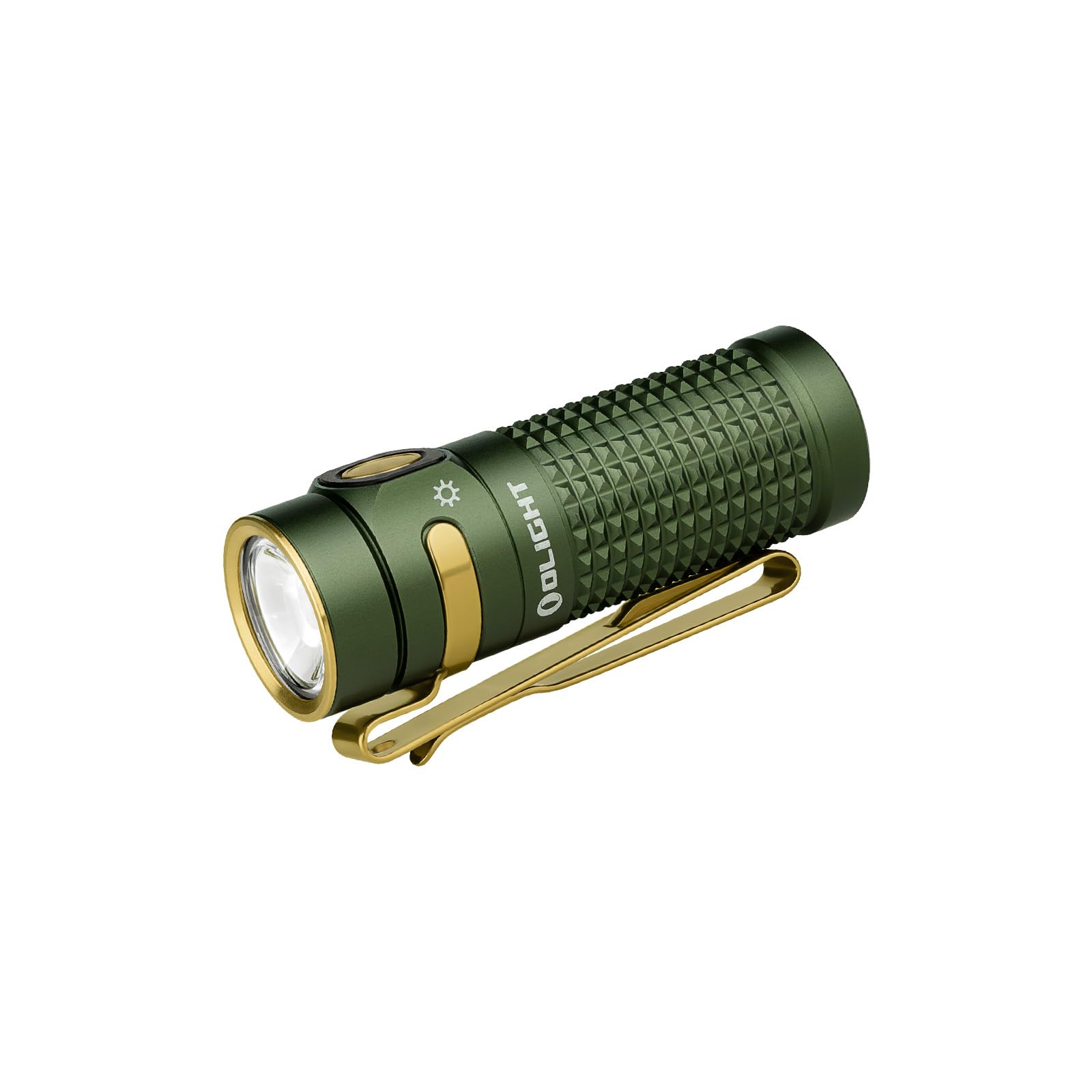
For dog walkers on unlit rural roads, the olight s2r baton ii vs fenix pd35 for dog walkers rural roads debate usually comes down to one question: do you want a compact, magnetic-tail rechargeable that disappears in a jacket pocket, or a longer-throw tactical light that punches a beam down the lane so drivers see you from a quarter mile out? Short answer: the Olight S2R Baton II is the better everyday companion for routine evening walks with your dog because it is smaller, USB-magnetic rechargeable, and easy to one-hand while holding a leash. The Fenix PD35 (V3) is the better pick if your roads are pitch black, fast, and shoulderless, because its tighter hotspot reaches farther and its dedicated tactical tail switch is faster to flick to turbo when a car crests a hill. Below we break down beam profile, runtime, pocket carry, weather sealing, and leash-friendly ergonomics so you can pick the right one for your route.
Why rural dog walks are a different lighting problem
Suburban sidewalk walks need a wide, low-lumen flood so you do not blind oncoming neighbors and so your dog can see the patch of grass in front of them. Rural-road walks are different in three measurable ways. First, your throw needs are longer: you want a hotspot that reaches at least 100 meters so a driver coming around a bend registers a moving light source before they register your dog. Second, your runtime needs are longer: a 45-minute loop with a young Labrador can stretch to 75 minutes if you stop to chat with a neighbor, and a flashlight that dies in 50 minutes on its useful brightness is a liability. Third, your hands are busy: you have a leash in one hand, possibly a poop bag, and you need to operate the light without setting anything down. A flashlight that requires two hands to change modes is the wrong flashlight.
The best olight s2r baton ii vs fenix pd35 for dog walkers rural roads for your situation depends on how you plan to use it and where.
Both the Olight S2R Baton II and the Fenix PD35 V3 are popular EDC choices, but they were designed with different priorities. Understanding those priorities is the whole comparison.
Quick comparison at a glance
| Spec | Olight S2R Baton II | Fenix PD35 V3 |
|---|---|---|
| Max output | 1,150 lumens (turbo, short burst) | 1,700 lumens (turbo, short burst) |
| Useful sustained brightness | ~120 lumens for ~5 hours | ~150 lumens for ~5 hours |
| Max beam distance | ~135 meters | ~357 meters |
| Beam profile | Balanced flood with usable hotspot | Tight hotspot, narrower spill |
| Battery | 3500 mAh proprietary 18650, magnetic USB charging | Standard 21700 or 18650, USB-C in port |
| Length / weight | 99 mm / 102 g with battery | 140 mm / 97 g body, ~160 g with battery |
| Switch layout | Side switch only | Side switch + tactical tail switch |
| Water rating | IPX8 (2 meters) | IP68 (2 meters) |
| Pocket clip | Two-way, magnetic tail cap | Two-way, no magnet |
Beam pattern: who wins on a dark country road
The Fenix PD35 V3 throws roughly 357 meters at turbo. That is the headline number and it matters when an oncoming pickup is doing 45 mph on an unlit hill. You can hit the side of a barn at 200 meters, light a road sign at 150 meters, and signal a car that you are present long before they could otherwise see your reflective collar. The trade-off is that the spill is narrower than the Olight, so when you point it at your feet to check for a deer-killed possum, the patch of useful light immediately around your dog is smaller.
The Olight S2R Baton II throws around 135 meters and uses a TIR optic that produces a smooth, even flood with a soft hotspot. For walking, this is actually the more pleasant beam. There are no rings, no harsh edge, and the spill lights the ditch, the shoulder, and your dog at the same time. The hotspot still reaches far enough to see a deer at the treeline or wave at a car a block away, but it is not a thrower. If 80% of your walks are at moonless dusk on a road with mild curves, the Olight beam is more comfortable. If your road is straight, fast, and truly black, the Fenix beam keeps you safer.
Runtime and battery: how long is your loop, really
Both flashlights have similar useful-brightness runtimes around 5 hours at a true walking-appropriate output (100-150 lumens). The differences come at the edges. The Olight S2R Baton II uses a proprietary 3500 mAh 18650 cell with a magnetic charging puck that snaps to the tail. You drop the light on the puck on your kitchen counter when you get home, and it is full in about 3.5 hours. You never unscrew anything. That convenience matters when the walk is a daily habit, because rituals that are easy to maintain get maintained.

The Fenix PD35 V3 takes either a standard 18650 or a 21700 (with the included adapter), charges over USB-C through a port on the body, and accepts any standard rechargeable 18650 you already own. That flexibility is its own kind of convenience. You can throw a spare cell in a coat pocket on a winter night when batteries die faster, and you are not locked into a single proprietary cell. For backup-minded carriers, that matters.
If you want to make either light last longer between charges, our guide on how to maximize flashlight battery life covers brightness habits, storage charge levels, and cold-weather effects that genuinely move the needle.
One-handed operation while holding a leash
This is the deciding factor for most dog walkers and it is the spec sheet does not tell you. The Olight S2R Baton II has a single side switch. Click for on/off at the last-used brightness, hold to ramp through the levels, double-click for turbo, triple-click for strobe. With your leash in one hand and the light in the other, you can do all of this with your thumb. You never break your grip.
The Fenix PD35 V3 has a side switch for mode changes and a tactical tail switch for momentary on. The tail switch is fast and decisive, which is great if you suddenly need turbo to spot a coyote, but the two-switch system is harder to manage one-handed in winter gloves. You will sometimes change modes when you meant to turn the light on, or vice versa. Once you build muscle memory it is fine, but the Olight is more forgiving on day one.
The magnetic tail cap is a sleeper feature for dog walkers
Hooked onto your steel mailbox at the end of the driveway, the S2R Baton II becomes a porch light pointing down the road while you leash up the dog. Snapped to the metal post of your fence, it lights the yard for the last bathroom trip of the night. Stuck to the underside of your car's open trunk lid, it lights the cargo area when you load a muddy dog. The Fenix has no magnet, so you would need a separate accessory or you simply set the light down. Small thing, but if you have ever fumbled for a clip in the dark with a wet leash, the magnet earns its keep.
Weather sealing and durability
Both lights are rated for 2 meters of submersion. The Fenix has a slightly higher IP68 rating on paper. In practice, neither will fail in rain, snow, or a dropped-in-a-puddle moment. Both can survive being run over by a car tire on gravel (we do not recommend testing this). The Fenix body is longer and slightly thicker-walled, so if you tend to drop your flashlight on pavement, it has a small edge. For routine dog-walking abuse, both are overbuilt.
Keeping either light reliable over years of use is mostly about lubricating the threads, keeping the lens clean, and not storing a fully discharged cell. Our guide to maintaining an EDC flashlight walks through the 10-minute monthly routine that prevents 90% of long-term failures.
Pocket carry and how it rides on a walk
The Olight is 99 mm long and weighs about 102 g with the battery installed. It clips into a jeans pocket without printing and rides nicely in the chest pocket of a barn coat. The Fenix is 140 mm long and around 160 g loaded. It carries fine in a jacket pocket but is conspicuous in jeans, and the longer body means the head pokes out farther when clipped. If you want a flashlight you forget about until you need it, the Olight wins. If you are happy to feel its weight as reassurance, the Fenix is no real burden.
Olight S2R Baton II
The S2R Baton II is the right pick for the everyday dog walker who wants a small, rechargeable, idiot-proof light that lives on a magnetic puck by the back door. Its smooth flood beam is friendly to your dog and your eyes, its single-switch interface is fast in gloves, and its magnetic tail makes it useful as a clip-on yard light. For full specs and our long-term notes, see our Olight S2R Baton II review.
Fenix PD35 V3
The PD35 V3 is the right pick if your rural road is truly dark, straight, and fast, or if you want a tactical-style tail switch and the option to run standard cells. The longer throw and brighter turbo give you real warning distance against vehicles, and the universal battery system means you can carry a spare 18650 from your other lights. For our full breakdown, see the Fenix PD35 V3 review.
Which one should a dog walker on rural roads actually buy
If your road has streetlights every quarter mile, gentle curves, and modest traffic, buy the Olight S2R Baton II. The smaller body, magnetic charging, and friendlier beam pattern will get used every single day. If your road is a true country lane with no shoulder, no lights, and the occasional pickup at 50 mph, buy the Fenix PD35 V3. The extra throw is genuine safety, not a spec-sheet luxury. Households with one of each are not uncommon, and for good reason.
Still weighing options across the broader category? Our roundup of the best tactical flashlights for everyday carry covers a few alternatives in this size class, and our buyer's guide on how to choose the best everyday carry flashlight is a useful frame for matching light to use case.
Frequently Asked Questions
Is 1000 lumens enough for walking a dog on a country road at night?
Yes, and you will rarely use 1000 lumens for more than a few seconds at a time. A sustained 100-200 lumen output is plenty to see the road, your dog, and oncoming hazards. The high-lumen turbo modes on both the S2R Baton II and the PD35 V3 are for momentary use - signaling a car, identifying an animal at the treeline, or briefly lighting a long stretch of road. Running either light on max continuously will overheat the head and drain the battery in under 90 minutes.
Will a flashlight blind oncoming drivers on a rural road?
It can if you point a 1000-lumen turbo beam straight at a windshield. The polite practice is to angle the light down and to your side as a car approaches, so the driver sees you as a moving light source without being flashed in the eyes. A momentary turbo flick to make sure they have seen you is fine. A continuous high beam aimed at their face is rude and counterproductive - a blinded driver is a more dangerous driver.
Which is better in cold weather for early-morning winter walks?
Both lights handle sub-freezing temperatures, but the Fenix PD35 V3 has a slight edge because its battery is not glued into a proprietary system, so you can warm a spare cell in an inside pocket and swap it if the primary cell sags in deep cold. The Olight's magnetic charging is still fast and convenient, but its cell capacity in single-digit temperatures drops noticeably. If you walk before sunrise in January, carry a backup either way.
Can I clip either flashlight to a dog harness or leash?
Technically yes, practically no. Both clips are designed for pocket carry, not for a moving leash strap, and the geometry tends to torque the clip or scratch the host material. A better solution is a dedicated clip-on dog-collar light for visibility, while you carry the S2R or PD35 for your own walking light. The clip-on is for being seen; the flashlight is for seeing.
Is the Olight S2R Baton II discontinued, and should I buy the newer Baton 3 instead?
The S2R Baton II is harder to find new than it was a few years ago, and Olight has moved much of its lineup to the Baton 3 and Baton 3 Pro Max. The Baton 3 is smaller and brighter on turbo but has shorter sustained runtime. The S2R Baton II's longer body and 3500 mAh cell still make it a better daily walker for many users, but if you find a great deal on a current-gen Baton, it is a fine alternative. The decision framework in our choose the best EDC flashlight guide applies to all of them.
Do I need a separate headlamp for dog walking, or is a handheld flashlight enough?
A handheld is enough for most rural-road walking because you want directional control - aiming at a specific bush, the road ahead, or sideways to a passing car. A headlamp puts the light wherever your face is pointing, which means you accidentally flash neighbors and your dog every time you look at them. That said, a low-output red headlamp is great for the leash-clipping and bag-tying parts of the walk where you need both hands. Many regular walkers carry both.
How long will the rechargeable battery in these flashlights last before it needs replacing?
Lithium-ion cells in this size typically deliver 300-500 useful full-discharge cycles before capacity drops below 80%. If you walk twice a day and top up after each walk, you are doing partial cycles and the cell can last 4-6 years. Storing the light at full charge or at full discharge for long stretches shortens that life. The Fenix's user-replaceable cell is an advantage here - you can swap in a new 18650 for around $10 in year five. The Olight's proprietary cell is also replaceable but is harder to source and costs more.
Key Takeaways
- Choosing the right olight s2r baton ii vs fenix pd35 for dog walkers rural roads means matching capacity and output ports to your actual devices
- Always check actual watt-hours (Wh), not just watts — runtime depends on Wh, not peak output
- Also covers: olight s2r vs fenix pd35 dog walking
- Also covers: best flashlight rural dog walker
- Also covers: dog walker edc flashlight comparison
- Compare price-per-Wh across models to find the best value for your budget